
For everyone
Website In Transition
Website in Transition During the month of August, we will be transitioning to a new website platform that is intended to improve access and search. During this period, parts of the website will be down, or appear incomplete. Thank you for your patience! This website is going through a significant restructuring to make it clearer, faster and more encompassing of the wide range of DCHS collections, publications, programs, photographs, and resources. Certain portions of the website will be offline until the end of October 2022. Thank you for understanding. Over the past five years we have grown from near zero to 800 pages of content and thousands of images and recordings…
Posted in: For everyone
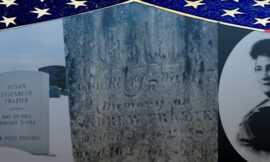
Susan Elizabeth Frazier
Above left to right: the recent headstone at the grave of Susan Elizabeth Frazier in Rhinebeck, NY in the shadow of gravestone of her great-great grandfather, Andrew Frazier, who fought in the Revolutionary War. Frazier’s 1919 passport photo. When President Woodrow Wilson addressed Congress in April 1917, seeking a declaration of war on Germany, he ended with a call to the nation saying, “The supreme test of the nation has come. We must all work, act, and speak together.” The emergency of the war, the proximity of the men, women and children of all races that were called to work together, created a sudden and visible near-meritocracy that challenged prior stereotypes. Although many of those stereotypes and prejudices persisted, many suffered cracks that began to help the United States move toward a fuller delivery on the promise that all are created equal. Susan Elizabeth Frazier (1864-1924) is of particular interest because decades before the war she had emerged as an outspoken thought leader on the untapped capacity of persons of color, and of women in general, in a world that needed their contributions. On February 16, 1892 Frazier spoke to the Brooklyn Literary Union on the topic of, Some Afro American Women of Mark, profiling a list of women of color who had made important contributions that were under represented. Susan Elizabeth Frazier Susan Elizabeth Frazier’s paternal great-grandfather served in the Revolutionary War out of Dutchess County, including at the Battle of White Plains. Andrew Frazier earned a pension and his headstone reflects this service. Miss Frazier herself was born in, and lived in, New York City. She earned a national reputation when, in 1896, she became the first person of color to teach White students in New York City. Although her legal action failed, her moral argument and public relations appeal prevailed. The story was carried in newspapers across the country. She was a teacher in the public schools until her death in 1924. In addition to her teaching, Frazier founded and became President of the Womens’ Auxiliary of the 369th, the Harlem Hellfighters. During her tenure she received accolades from former President Theodore Roosevelt, and a wide range of social organizations in New York City. In 1919, in a highly fortuitous and coincidental reflection of her commitment to teaching and to veterans, she won a New York City newspaper contest as “New York City’s favorite teacher.” The prize was a trip to the battlefields of Europe. Comments from newspapers at the time of her trip in 1919 reflect her strong character: “An effort was made to buy her off when it was discovered that she was one of the successful contestants. But she would not be bought. To all of the propositions, arguments and offers to prevent her sailing, Miss Frazier returned one answer, that she was standing on her rights as an American woman and would make the trip. On board the boat an effort to seat her at a separate table and a similar effort at the hotel in Paris were frustrated by Miss Frazier’s ignoring of the plan. The officer in charge of the party, in fact, was put to the necessity of apologizing to Miss Frazier.” She died February 3, 1924, the same day as former President Wilson. Her funeral was held at the Regimental Armory and included remarks by former commander Col. Wm. Hayward and the subsequent and commander at the time, Col. Arthur Little. She was accorded full military honors, the first time for a woman of color according to newspapers at the time. And yet she came to rest in an unmarked grave in the family plot she had purchased on organized for the family in Rhinebeck. Newspaper reports at the time gave conflicting reports as to whether she was buried in New York City or Rhinebeck. In 2018, local residents secured an investigation by cemetery managers and confirmed her burial there. They raised money to erect a memorial headstone at what had prior to this been an unmarked grave. On her memorial headstone are the words, “Her Voice Endures” indicating the firm belief that her call for the full capacity of persons of color and of women should be welcomed and accommodated. The Frazier family of Dutchess County fought in all of the major wars of the United States:the Revolutionary War, the Civil War, World War 1 and World War 2.
Posted in: For everyone
Van Wyck Papers
Indenture and apprenticeship papers of Egbert Cook Personal correspondence from James Cook to John Cook “Dear Father” letters March, May and November 1808 1807 Correspondence
Posted in: DCHS Collections & Archives, For everyone

In Person.Dutchess Award
Historical Archive and Research Assistance
Important: Since we rely heavily on volunteers, please let us know in advance to confirm availability and clarify your needs by clicking on the button below. If you or someone you know would willing to spend some volunteer hours onsite helping the public, please let us know. SUN – by appointmentMON – by appointmentTUE – by appointmentWED – by appointmentTHU – DROP-INS: 10 am to 3 pmFRI – DROP-INS: 10 am to 3 pmSAT – by appointment We can make an onsite appointment 24/7! We can get you a better answer if you provide certain specifics of what you are looking for — in advance of that appointment. What can I do during drop in hours Thursday and Friday 10 am to 3 pm? Take a self-guided tour to see current archival work Receive assistance completing our online “Ask” form Note: We are non-profit institution (501c3) that receives no taxpayer dollars. We are responsible for the physical care of approximately three thousand square feet of physical, archival items, including books. We have two libraries non-circulating materials. Given the volume of material we have, and our reliance on volunteers, we can respond to your questions most effectively if you could please use the form at the button above.
Posted in: For everyone

About
Our Mission: The mission of the Dutchess County Historical Society is to collect, preserve and share the history of Dutchess County to inform and educate present and future generations. What We Believe and What We Do The Dutchess County Historical Society (DCHS) remains committed to being the most meaningful source of Dutchess County history, a commitment in place since its 1914 founding. We do this through the responsible archival stewardship of tangible objects, and the restless and energetic interpretation and presentation of its history to the public. DCHS conserves the past to help us understand the present and prepare for the future. We are proud to be known for our community outreach through a wide range of publications, awards, exhibits, programs, talks, writings, videos, and oral histories. Our Annual Yearbook, published since 1914 and the oldest continuously published annual in New York State, is fully available online. In addition, 14 books on local history have been published. Online and traditional exhibits, lectures, history awards, conferences, and special presentations a round out programming for members of the Historical Society and the community at large. DCHS is a not-for-profit organization. We rely on support from memberships, gifts, grants, and donations. The Dutchess County Historical Society is a tax-exempt, charitable, non-profit organization as described in section 501(c)(3) of the IRS code. Learn more about us by watching this 2-minute video “We Believe History Speaks.” The Dutchess County Historical Society (DCHS) preserves a wide range of archival materials—including photographs, manuscripts, maps, and rare documents—to support research into the people, places, and events that have shaped Dutchess County. Whether you’re exploring local history, a historic property, or a community organization, our collections may offer valuable insight. To assist you more effectively, we kindly request that all research requests be submitted in advance through our online form at www.dchsny.org/ask. Providing specific details ahead of time allows our staff and volunteers to assess your inquiry, identify relevant materials, and prepare appropriately. As a small nonprofit that relies heavily on volunteer support, this helps us make the best use of everyone’s time and resources. Please note: for genealogical research, we often cannot add to what is already broadly available through online databases unless a family has donated original materials to DCHS through a Collections Gift. If you believe your family has contributed to our archives, let us know and we will be happy to check. We’re grateful for your interest in Dutchess County’s history and look forward to supporting your research. We’re grateful for your interest in Dutchess County’s history and look forward to supporting your research. Bill Jeffway, Executive Directorbill.jeffway@dchsny.org DCHS Board of Trustees Wayne Nussbickel, PresidentMarcy Wagman, Vice PresidentJack Cina, Treasurer, Finance ChairChristine Crawford-Oppenheimer, SecretaryJennifer BreslinMichael BodenJim Brands Peter BuntenTom CervonePeter FormanEileen HaydenHarry H. Hill, IIIKaren H. LambdinRick SoedlerWilliam P. Tatum, III
Posted in: For everyone