
Veterans

Yearbook Encore Edition 2025
Profiles of the American Revolution Since 1914 We are pleased to announce the third Encore Edition of the Dutchess County Historical Society Yearbook. Published since DCHS’s founding in 1914, the DCHS Yearbook is New York State’s longest-serving historical journal. Known for its thorough research and interesting narratives, the DCHS Yearbook is meant to be more broadly accessible than an academic journal, although contemporary issues are footnoted for accuracy and to help prompt further inquiry. DCHS Yearbook Encore Editions republish articles bundled around a single topic. They are republished with no changes to simply and directly reflect the priorities, perspectives, and language of a certain time. Profiles of the American Revolution Since 1914 helps us better under-stand how the people of Dutchess County both shaped and were shaped by the American Revolution as we approach the 250th anniversary of the official signing of the Declaration of Independence. Bill Jeffway & Melodye Moore Contents Foreword by Bill Jeffway Introduction by Willaim P. Tatum III, Ph.D., Dutchess County Historian Bartholomew Crannell a Twentieth Century Plea for Anglo-American Good Will by Helen Wilkinson Reynolds Dutchess County Men of the Revolutionary Period: John Jay by J. Wilson Poucher Dedication of Monument, Chambly, P.Q. (Province of Quebec) by Mrs. Theodore de Laporte Dutchess County Men of the Revolutionary Period: Melanchthon Smith by J. Wilson Poucher Dutchess County Men of the Revolutionary Period: Udny Hay by Helen Wilkinson Reynolds Dutchess County Men of the Revolutionary Period: Captain Israel Smith by J. Wilson Poucher Dutchess County Men of the Revolutionary Period: General Jacobus Swartwout by J. Wilson Poucher Dutchess County Men of the Revolutionary Period: Philip Schuyler by J. Wilson Poucher Dutchess County Men of the Revolutionary Period: Dr. Peter Tappen by J. Wilson Poucher Dutchess County Men of the Revolutionary Period: Colonel Lewis DuBois; Captain Henry DuBois by J. Wilson Poucher Dutchess County Men of the Revolutionary Period: Major Elias Van Bunschoten by J. Wilson Poucher Monument to Chief Daniel Nimham by J. Wilson Poucher Dutchess County Men of the Revolutionary Period: Henry Livingston by J. Wilson Poucher Dutchess County Men of the Revolutionary Period: Major Andrew Billings by J. Wilson Poucher Dutchess County Men of the Revolutionary Period: Colonel Frederick Weissenfels by J. Wilson Poucher Dutchess County Men of the Revolutionary Period: James Livingston and Some of His Descendants by J. Wilson Poucher Dutchess County Men of the Revolutionary Period: Zephaniah Platt by J. Wilson Poucher Dutchess County Men of the Revolutionary Period: Judge Robert R. Livingston, His Sons and Sons-in-Law by J. Wilson Poucher Dutchess County Men of the Revolutionary Period: Colonel Henry Ludington and His Daughter Sybil by Barbara Corliss and J. Wilson Poucher Dutchess County Men of the Revolutionary Period: Baron Friedrich Wilhelm von Steuben by J. Wilson Poucher Elizabeth Crannell, Wife of Dr. Peter Tappen by Amy Ver Noy Jacobus Swartwout: Resident of Rombout Precinct by Joseph W. Emsley Sybil Ludington: Heroine of the Revolution by Louanna J. Elya Alexander Hamilton, Melancton Smith, and the Ratification of the Constitution in Poughkeepsie, New York by Robin Brooks
Posted in: For everyone, Veterans, Yearbook
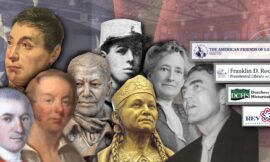
1824: Lafayette in Dutchess County
Big Moves & Intimate Gestures. Why Lafayette’s approach to equality has meant so much to so many. Below is a continually evolving concept that looks at Lafayette through the hearts & minds of those in his 1824 diverse, record-size audiences (and later audiences well into the 20th century) who were at greatly varying degrees of success in realizing the American promise of equality. An in-depth look here: Click full screen icon bottom-left for best view A quick summary below: September 16, 2024 will mark the 200th anniversary of Lafayette’s visit to Dutchess County’s Poughkeepsie and Staatsburg — and Columbia County’s Clermont and Hudson. September 19 will mark the same anniversary for his visit to Red Hook and Fishkill Landing. Part of a 13-month tour of all 24 states, he was the “nation’s guest” at the instigation of President James Monroe, at the invitation of Congress. They sought to rally and unify the country as it approached its 50th anniversary: July 4, 1826. Monroe’s sense that time was running out was prescient. Both John Adams and Thomas Jefferson died on that day. Monroe died July 4, 1831. Lafayette died in 1834 in France. Called a man of two worlds because of his role in the 1776 American Revolution and the French Revolution at the end of the following decade, he was only 19 years old when Congress made him a Major General. In addition to citations for bravery and effectiveness in the military, he contributed his personal wealth, and persuaded the King of France to formally and actively support the American cause. Green indicates public events. Blue indicates private visits. A firm commitment to truth. Big moves & intimate gestures. Toward the end of his life, Lafayette called for a strict adherence to truth. He said that moderation is not the average between two points, but a firm grip of the truth. “When it is said that four and four make eight and an extravagant person pretends that it makes 10, is it more reasonable to maintain that four and four make nine? No, true moderation is discovering what is true, and firmly abiding by it.” Nowhere is this more evident than his views and actions and commitment the idea that all are created equal. To Lafayette, all meant all. In Lafayette we find a very distinct combination of big moves, such gaining the support of France in the American cause, or his own personal support of the same, and small gestures, like kissing the hand of Marie Antionette to calm an angry crowd, or the tip of his hat to an enslaved Kentucky boy (Lewis Hayden shown above) who said that inspired him to become the nationally known abolitionist that he was. American Indians. Big moves: Lafayette assisted the Oneida Nation, America’s ally during the Revolution, with fortifications of their settlement and persuaded them to send 47 of their soldiers to join the Continental Army. They gave him the name Kayewla, or Great Warrior. Small gesturees: Not seeing any Oneida on his June 10, 1825 visit to Utica, a former Oneida stronghold, Lafayette asked his hosts about them, surprising them with the request. When the Oneida came, they had a private audience with Lafayette that he had not granted others. Free and enslaved Blacks: Big moves: Lafayette enlisted James Armistead, an enslaved man in Virginia who had earned a temporary reprieve from his owner, to became an invaluable double-agent spy, infiltrating the highest levels of the British military. Small gestures: but was returned to being enslaved at the end of the war and was denied a pension for lacking a combat role. Lafayette successfully personally petitioned congress on both accounts. White working-class and poor: Big moves: There is less of a direct connection, but an important one nonetheless. For much of his tour, Lafayette travelled with a close friend, Frances “Fanny” Wright. Within a few years, she be so aligned to the Working Men’s Party that the party became known as the Fanny Wright party, and its candidates Fanny Wright men. Small gestures: The Poughkeepsie Telegraph reported that at Forbus house, “We observed among [the crowd] an old revolutionary soldier bearing the marks of poverty and hardship, but whom the general recognized. And it was gratifying to see with what cordiality they shook hands. The old soldier was obliged to yield to the pressure of the crowd and passed off with his eyes sparkling and his countenance lighted up, and was evidently inspired with a new glow of life.” Fanny Wright became close to Lafayette immediately upon meeting him in France in 1821. She travelled with him on a good portion of his 1824/1825 tour including a stay with Jefferson at Monticello. She went on to become associated with the Workingmen’s Party. Lafayette penned a successful letter of support in James Armistead’s request for freedom, which had prior been denied. When Lafayette arrived in Utica in 1825, he insisted the Oneida be invited, who he granted. aprivate audience.
Posted in: 18th Century, For everyone, Veterans
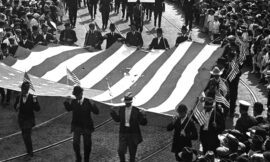
Over Here Traveling Exhibition
Remembering World War One Recognizing the 100th anniversary of the end of World War One, DCHS published two consecutive Yearbooks on the topic, and launched a traveling exhibition that visited every city and town in the county, at least once. You are invited see the exhibition here. The exhibit launched at the FDR Library’s Wallace Welcome Center and then traveled to municipal buildings, libraries, and outdoor events reaching every city and town in the county at least once. Click any image below for best viewing Below, click on any image once, then again, for best viewing.
Posted in: For everyone, Veterans
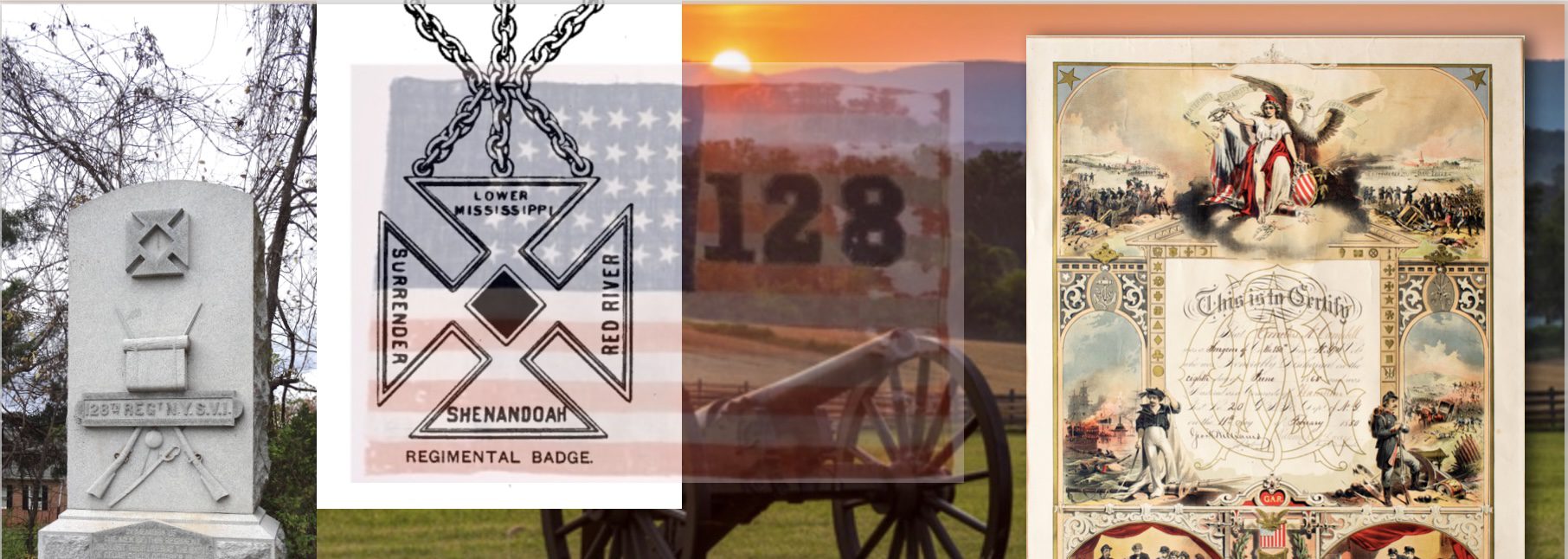
Dutchess County Soldiers in Shenandoah
DCHS Trustee and Dutchess Community College professor Dr. Michael Boden, himself a long-serving veteran is just back from the Shenandoah battlefield. As is his style, he takes moments of national importance and allows us to see and experience them through the eyes of the men, in this case, who would have been our friends and neighbors had we lived in Dutchess County over a century and a half ago. After you click on the video, for best viewing click on the Full screen icon at the bottom right of the video screen.
Posted in: For everyone, Veterans
WW1 Sgt. Sebie Bostic, a profile by his grandson, Robert Magill
Posted in: Poughkeepsie, Veterans