
Topics

Yearbook Encore Edition 2025
Profiles of the American Revolution Since 1914 We are pleased to announce the third Encore Edition of the Dutchess County Historical Society Yearbook. Published since DCHS’s founding in 1914, the DCHS Yearbook is New York State’s longest-serving historical journal. Known for its thorough research and interesting narratives, the DCHS Yearbook is meant to be more broadly accessible than an academic journal, although contemporary issues are footnoted for accuracy and to help prompt further inquiry. DCHS Yearbook Encore Editions republish articles bundled around a single topic. They are republished with no changes to simply and directly reflect the priorities, perspectives, and language of a certain time. Profiles of the American Revolution Since 1914 helps us better under-stand how the people of Dutchess County both shaped and were shaped by the American Revolution as we approach the 250th anniversary of the official signing of the Declaration of Independence. Bill Jeffway & Melodye Moore Contents Foreword by Bill Jeffway Introduction by Willaim P. Tatum III, Ph.D., Dutchess County Historian Bartholomew Crannell a Twentieth Century Plea for Anglo-American Good Will by Helen Wilkinson Reynolds Dutchess County Men of the Revolutionary Period: John Jay by J. Wilson Poucher Dedication of Monument, Chambly, P.Q. (Province of Quebec) by Mrs. Theodore de Laporte Dutchess County Men of the Revolutionary Period: Melanchthon Smith by J. Wilson Poucher Dutchess County Men of the Revolutionary Period: Udny Hay by Helen Wilkinson Reynolds Dutchess County Men of the Revolutionary Period: Captain Israel Smith by J. Wilson Poucher Dutchess County Men of the Revolutionary Period: General Jacobus Swartwout by J. Wilson Poucher Dutchess County Men of the Revolutionary Period: Philip Schuyler by J. Wilson Poucher Dutchess County Men of the Revolutionary Period: Dr. Peter Tappen by J. Wilson Poucher Dutchess County Men of the Revolutionary Period: Colonel Lewis DuBois; Captain Henry DuBois by J. Wilson Poucher Dutchess County Men of the Revolutionary Period: Major Elias Van Bunschoten by J. Wilson Poucher Monument to Chief Daniel Nimham by J. Wilson Poucher Dutchess County Men of the Revolutionary Period: Henry Livingston by J. Wilson Poucher Dutchess County Men of the Revolutionary Period: Major Andrew Billings by J. Wilson Poucher Dutchess County Men of the Revolutionary Period: Colonel Frederick Weissenfels by J. Wilson Poucher Dutchess County Men of the Revolutionary Period: James Livingston and Some of His Descendants by J. Wilson Poucher Dutchess County Men of the Revolutionary Period: Zephaniah Platt by J. Wilson Poucher Dutchess County Men of the Revolutionary Period: Judge Robert R. Livingston, His Sons and Sons-in-Law by J. Wilson Poucher Dutchess County Men of the Revolutionary Period: Colonel Henry Ludington and His Daughter Sybil by Barbara Corliss and J. Wilson Poucher Dutchess County Men of the Revolutionary Period: Baron Friedrich Wilhelm von Steuben by J. Wilson Poucher Elizabeth Crannell, Wife of Dr. Peter Tappen by Amy Ver Noy Jacobus Swartwout: Resident of Rombout Precinct by Joseph W. Emsley Sybil Ludington: Heroine of the Revolution by Louanna J. Elya Alexander Hamilton, Melancton Smith, and the Ratification of the Constitution in Poughkeepsie, New York by Robin Brooks
Posted in: For everyone, Veterans, Yearbook

Bill of Sale: Dick
DCHS Collections Documents of Enslavement A Fishkill man named Dick is sold by James Slight to Thomas Parker October 30, 1801 Witnessed by John Beckwith.
Posted in: 18th Century, African Heritage, For everyone

Medical Treatment of Enslaved “Jack”
Gilder Lehrman Documents Related to Locsl Enslavement June 30, 1783 Rhinebeck’s renowned medical doctor Ananias Cooper, writes to Robert Livingston at Livingston Manor about the condition of his enslaved man “Jack”
Posted in: African Heritage, For everyone
In Person.Business Award
Healing with Plants: The Thomsonians of Dutchess County (1820-1850)
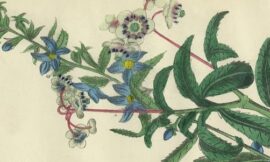
We use such balms as have no strife, With Nature nor the Laws of Life; With blood our hands we never stain, Nor poison men to ease their pain. The Poughkeepsie Thomsonian [1842] Now mostly forgotten, this motto once represented one of the most prominent health crazes of the 19th century. The poem advertised the Thomsonian (or “Botanic”) system of medicine in which doctors challenged conventional medical practice, instead recommending natural plant-based cures. While largely ineffective, these remedies captivated public attention, something we are all too familiar with in an age of health influencers and digital cures. Dutchess County, particularly Poughkeepsie, had a strong voice in the Thomsonian movement. This philosophy created a vibrant sub-culture within the County’s medical community for more than two decades, receiving state and national attention. Dr. Samuel Thomson (1769-1843), the movements founder, worked as an herbalist and botanist in rural New Hampshire. In the summer of 1790, Thomson’s wife Susanna suffered a life-threatening illness that conventional medicine was unable to cure. Turing to a plant-based remedy, Susanna eventually recovered. The following decades, Thomson developed his new medical system, testing various cures on his neighbors and children. In 1822 he released the New Guide to Health, or, Botanic Family Physician, which outlined natural remedies to common alignments. Above: Portrait of Dr. Samuel Thomson, Founder of the Botanical Health Movement. The image appears in the 1835 edition of his New Guide to Health. Thomson and his followers cultivated a personal system of bodily health in which medicine targeted the root of the problem rather than treat its symptoms. These “cures” ranged from specific activities such as the famous Thomsonian steam bath in which a patient drank a mix of cayenne pepper and laxatives while sitting in a sauna, to common herbal medicines. Ardent Thomsonianists publicly denounced doctors who practiced blood-letting and used harmful or toxic drugs such as Opium, Laudanum, and the mercury solution Calomel. These cures purported to solve illness without invasive procedures. Through natural substances—only compounds easily derived from plants—they promoted a holistic view of the human body, targeting both physical and emotional unwellness. The historic News Paper Collection in the Dutchess County Historical Society’s archive, replete with signs of this system, shows the range of these Thomsonian remedies. One notice, included in an 1836 issue of Poughkeepsie Journal advertised “syrup of Liverwort,” “Cephalic Snuff,” and “Concentrated Syrup of Sarsaparilla” all made in Thomsonian fashion with “medicinal herbs, extracts, and ointments.” Another, published in an 1841 issue of the Poughkeepsie Telegraph, claimed that all-natural vegetable pills sold in every town in Dutchess would cure any fever, “Bilious Cholic, Dypensia, heart burn, and Female Weakness.” These local examples aptly demonstrates both the range of uses and the variety of material claimed by the Thomsonianist. Through cures like this, the movement attempted to empower individual health. Under the Thomsonian system, patients had full control over the administration of treatments. Informally trained practitioners and local Thomsonian publications could recommend cures that could be purchased at Thomsonian stores, but nothing was prescribed. Thus, easily applied and widely applicable cures had the greatest appeal. The movement grew as stories of miraculous cures spread throughout the county. Outside of New England, New York had the largest community of Thomsonianists, and Poughkeepsie functioned as a locus for the state’s Thomsonian movement during its formative years. Indeed, as the Poughkeepsie Eagle noted in 1837, the city was quickly becoming the meeting place of Thomsonian medical conferences and the State’s Thomsonian Medical Society. The most prominent local Thomsonian was Thomas Lapham (b. c.1780). Lapham ran a clinic, store, and school for the new systems treatments on the North end Catherine Street in Poughkeepsie. In May of 1838 Lapham along with local businessman A. H. Platt printed the inaugural issue of the Poughkeepsie Thomsonian a bi-monthly newspaper that detailed, remedies, clinics, and testimonies. Each issue of the Poughkeepsie Thomsonian offered to “Let a knowledge of the healing art be diffused among the people,” a nod to the broader movement’s desire to make medical knowledge public. The publication’s readership rapidly expanded, distributing thousands of papers, reflecting the movement’s success in the county with dozens of practicing offices and several Thomsonian societies. The zenith of Dutchess Thomsoniansm can be seen in medical publications where the Thomsonians of Dutchess County gain national attention. In 1840, the editors of the Poughkeepsie Thomsonian—facing harsh criticism over the validity of the medical system—called for the creation of an informative almanac. Originally used as a tool to chart stellar movements and weather, by the 19th century almanacs were full of informative articles that often looked at personal health, farming, and history. Their reputation for credibility made them the most popular serial publication after newspapers. Lapham and Platt called for a national publication based in Poughkeepsie titled the United States Thomsonian Almanac (or Poughkeepsie Thomsonian Almanac). In his appeal, Lapham described almanacs as “powerful auxiliaries [for] advancing the Thomsonian system.” During a meeting of notable practitioners later that year Poughkeepsie’s request was accepted. While several other communities already had established and successful almanacs, Thomsonianists in Poughkeepsie distinguished their book by adding several new cures that existed outside of Thomson’s system. They even provided a detailed history of several. In doing this, they promoted unapproved herbs which they claimed better regulated the body’s blood and had a wider historical use. Left: Title page of the United States Thomson Almanac published in Poughkeepsie, 1840. Image courtesy of Heritage Auctions. The movement’s founder declared the United States Thomsonian Almanac dangerous, claiming the additions would harm any who used them and had no place in the medical system. However, the damage had already been done as Lapham and Platt shipped thousands of copies throughout New York and the country. Amongst practicing Thomsonists the book received high praise. The Botanico-Medical Recorder in Cincinnati, Ohio deemed it “admirably well calculated” and called for all Thomsonians in the West to “exert himself to circulate this almanac.” Despite its success, issues with nonconformity prevented further publications of the almanac. However,
Posted in: Decoding Dutchess Past, Decoding Dutchess Past, For everyone
The Knights of Dutchess County
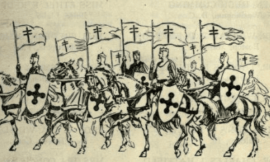
Each June marks the end of another academic year, and students throughout Dutchess County celebrate advancements in their education. A display of pins donated to the Dutchess County Historical Society by Marjorie Mangold in honor of her late husband reminds us that just over a century ago thousands of students shared this excitement through a unique end-of-the-year ceremony: investitures of Health Knighthood. The pins in the Mangold Collection, brought together by Harold Mangold Sr. and Jr. depict intriguing scenes of knights charging into battle or fighting dragons. On the border of each rests the phrase “Modern Health Crusade.” Once proudly worn by student “Crusaders” throughout the county, these pins speak to a complex history of children’s health education. The Modern Health Crusade (MHC) was a youth health education curriculum that began in 1915 to combat the spread of tuberculosis. The program lasted into the early 1930s and was taught in schools across the nation, Europe, and Asia. The Crusade succeeded in America during WWI, with one million students enrolled by 1919. Its popularity grew in the post-war period, climbing to well over three million active participants by 1923. First developed by National Tuberculosis Association (NTA), the HMC sought to cultivate hygienic and moral values. These values, deem by the HMC “health knighthood” or “health chivalry,” intended to mold children into good citizens able contribute to wartime preparedness. The movement’s founder Charles Mills deForest (1878-1947) called this the “Crusade Method of Health Training.” Above Left: Knight Pin; Depicts King Arthur knighting a Health Crusader with Camelot in background. Above is the National Tuberculosis Associations cross, a “K” for “Knight,” and a Health Cross. Above right: Squire Pin; Shows a horse and squire bearing a shield with the cross of the National Tuberculosis Association. Health Cross floats above. DeForest spent his career campaigning for children’s health education; he served as a field secretary for the American Red Cross Seals Division and the NTA. Throughout his work, he regularly noted that children struggled to adapt hygienic practices. DeForest posited that “good health” depended on students’ self-motivation. Therefore, he envisioned a curriculum that appeared as “fantasy game” which engaged children from kindergarten to 8th grade, charting their progress each term. In no less than four years, students moved through different knightly ranks. Beginning as a squire, a student became a Knight, then a Knight Banneret, and finally a Knight Banneret Constant. Advancement could only be obtained throughout the school year by the completion of “Crusade Chores.” These tasks, listed on a proscribed chart, ranged from hygienic activities such as “I washed my hands before each meal” to more aesthetic ones such as maintaining trimmed nails or hair. Each day the program required parents and teachers to sign off that the child had done these duties. “Chivalrous” students completed seventy-two chores a week, and after a year of living “chivalrously,” they were awarded the next rank. While deForest’s program was rigorous, he truly expected children to enjoy participating. In an article defending his methodology, he noted that, “Every child likes to play… He likes to play that he is grown, and to do something worthy of a grown-up.” Through play, the program reinforced “good health” with a tangible system of growth. “Health chivalry” sought to foster play through material rewards and competitions. This emphasis on recreation distinguished the program’s curriculum from other educational systems at the time. It attempted to alter methods of teaching rather than the information taught. A manual for teachers and nurses published by the NTA outlined how to include fantasy stories, songs, and crusade pageants. These elements culminated in the knighting ceremony, during which successful students moved to subsequent ranks. Dressed in handmade crusading outfits, students would gather singing Health Crusader songs as the teacher knighted students. During these celebrations, pins—like those in DCHS’s collection—were attached to the knight and to be worn during the following school year. Left: 1920 Knight Banneret Pin; Image of a mounted knight, holding the standard of the knight banneret with the letters “K” and “B” on either side of the Health Cross, the horse bears the National Tuberculosis Cross on flank. This appeal to competition was expressed in the schools and communities. The pins intentionally served as a physical sign of students’ position over their peers. As the NTA outlined, this disparity created a “visible daily reminder” of individual accomplishment which should motivate the student body to work harder. The MHC also granted students the opportunity to compete directly in national and inter-city tournaments. Schools in Beacon, Hyde Park, and Rhinebeck were the first in the nation to sign up to participate in the 1919 inaugural National Health Crusade Tournament where students participated in health and physical fitness drills. No Dutchess County school won the coveted pendant that year, but they continued to compete in the following tournaments. Indeed, the Health Crusade found a particularly strong voice in Dutchess County. An article a November 1919 issue of the Miscellany News—Vassar College’s student-run newspaper—noted that on the 25th of October, students from public and private schools in Poughkeepsie met at the Liberty Theater to watch a showing of the “Modern Health Crusade” movie. The children were so stirred by the film that the police present need to uphold “the standards of law and order.” The excitement of the students speaks to the program’s effectiveness. Its national success, in part, was propelled by Vassar College President Henry Noble MacCracken (1880-1970). MacCracken founded the Junior Red Cross of America in 1917. The new organization soon partnered with the NTA, heavily promoting the Modern Health Crusade. Under MacCracken’s leadership, Vassar College became a primary mode of outreach. A notice in the Poughkeepsie Eagle from February of 1919 remarked that Rhinebeck schools received lectures about the Crusade from Vassar’s Four-Minute-Girls, mirroring the wartime Four-Minute-Men whose spoke about war effort. Dutchess’ Collegiate involvement also spread nationally as NTA targeted Vassar seniors for executive positions at their headquarters in Philadelphia and as nurses throughout the country. By 1930 however, deForest and
Posted in: Decoding Dutchess Past, Decoding Dutchess Past, For everyone
Pre-Civil War Maritime Adventure
Dutchess County Free Black Communities:Opportunities & Risks of Maritime Adventure Before the Civil War We are grateful for the ongoing support of the Dutchess County Government in its sponsorship of this program and our Virtual Event Space for Black History Month, 2024. This program is different from our regular programs in that it is more of a sampler of emerging findings that relate to maritime activities of the pre-Civil War free Black community of Dutchess County. Books like Blackjacks and Sailing Toward Freedom have been opening up interest and dialogue in the maritime Underground Railroad and broader maritime life and work of the Black community in America’s first century. With a view to encouraging and inviting others to join in the work of “discovery” DCHS offers this sampler of emerging stories. ~ Bill Jeffway, February, 2024. One hour video documentary program: A few program highlights: We examine the dual water and inland routes, and dynamic of maritime opportunities and risks Expanding our understanding of the free Black community of Baxtertown Verbatim script:Downloadable pdf. Family histories written by descendants: Other topics related to local Black history Silent Sentinels of Local Rhinebeck History Black History DCHS Yearbook Encore Edition
Posted in: African Heritage

American Indian Heritage
Recognizing American Indian Heritage Month By Bill Jeffway A version of this article appeared in the November 15, 2023 Northern/Southern Dutchess News / Beacon Free Press. While not in a position to explain the full history of local Indigenous Peoples (see recommendations at the end of this article for that), as a way to recognize American Indian Heritage Month, we will introduce you to some of the Indigenous Peoples who lived here locally in the nineteenth century. We are cautioned in the 2010 book, “Firsting & Lasting, Writing Indians Out of Existence in New England” by Jean M. O’Brien, that the myth of the disappearance of the American Indian and the claim of Europeans to be the “first” to do things, like discover the Hudson, are based on an erasure of fact-based historical record. This began with James Fenimore Cooper’s 1826 book, The Last of the Mohicans, and remains a popular storyline, although not accurate. This provides short profiles of Indigenous People’s encountered in the documentation of our local history. Daniel Nimham Daniel Nimham (ca. 1724–1778) remains the most prominent American Indian associated with New York’s Hudson Valley and the American Revolutionary War. In addition to military service, he argued in courts for the return of land fraudulently taken by the Philipse family, part of Westchester County today. He traveled to England to argue his case to British authorities but was not successful. He died in service to the United States August 31, 1778 and is memorialized in the Town of Fishkill (see image). “Thick set Indian boy” We don’t know his name, but in DCHS Collections there is a copy of the New-York Journal of November 22, 1779, “Run away, on Saturday the 13th in Dover.. a thick set Indian boy with long black hair, about 13 years of age.” James Morehouse of Dover offered fifty dollars reward. The boy could have been enlsaved or indentured. Hannah Coshire In Frank Hasbrouck’s 1909 history of Dutchess County, he describes Hannah Coshire as the daughter of Jonah and Lydia Coshire and sister of Steve Choshire, owning a small piece of rocky land in the town of LaGrange. Hannah Coshire ied October 18, 1877 and is buried with her family in Moore’s Mills. In the 1860s and 1870s she was living with the Skidmore family as a servant in LaGrange. She was portrayed as the “last of her race” in her obituary. Henry Catskill Again in Hasbrouck’s history, Henry Catskill is described as being of the Wappinger who married and settled with local Blacks in the Fishkill hamlet of Baxtertown. Hasbrouck describes him by saying he was entirely Native in appearance, “a well-built, handsome man, with straight hair.” Susan May In Isaac Huntting’s 1897 history of Pine Plains he describes the May family as “pure Mohican Shekomeko.” From DCHS Collections we have the marriage record of Susan May to Andrew Frazier, Jr., son of a mixed-race African and European heritage. Prince Manessah or Minisee Again we rely on Huntting who explains that Manessah sometimes Minisee is an “Indian name.” “Prince Quack Minisee” is enshrined in a 1935 New York State historical marker saying he was an Indian medicine man. Research shows he may have been Black, in part or in whole, the name Quacko a relatively common name from Africa meaning “born on Wednesday.” He went on to Michigan with his sons in the late 19th century, and there the family became a widely-known and highly regarded frontier farming Black family, the Minisee family with descendants we’ve contacted and spoken to recently. “Louisa” Given her age and Florida birth, It seems very likely that Louisa was brought back from her native Florida by Nathan Darling of Rhinebeck. She shows up as sixteen years old and living in the Darling household as a servant. Darling was a Captain in the 2nd Dragoons during the Seminole Indian wars in the 1820s and 1830s.. He appears to have returned from Florida with a teenage Louisa who went on to marry a Black man, son of former slaves, and lived on Rhinebeck’s Oak Street. John Wannuaucon Quinney From DCHS Collections we have the hotel book register of the Poughkeepsie hotel and find that the John Quinney (1797-1855) who registered as a visitor there was none other than the most notable of Mohican leaders of the 19th century. He is registered as from Wisconsin which is where his people were “relocated to” from the area of the Hudson Valley. His visit may relate to the fact that then US Senator Nathaniel P. Tallmadge was from Poughkeepsie, as Tallmadge’s
Posted in: Decoding Dutchess Past, For everyone